
Last updated November 24, 2026
 Sweep & inspection
 Caps & crowns
 Flue relining
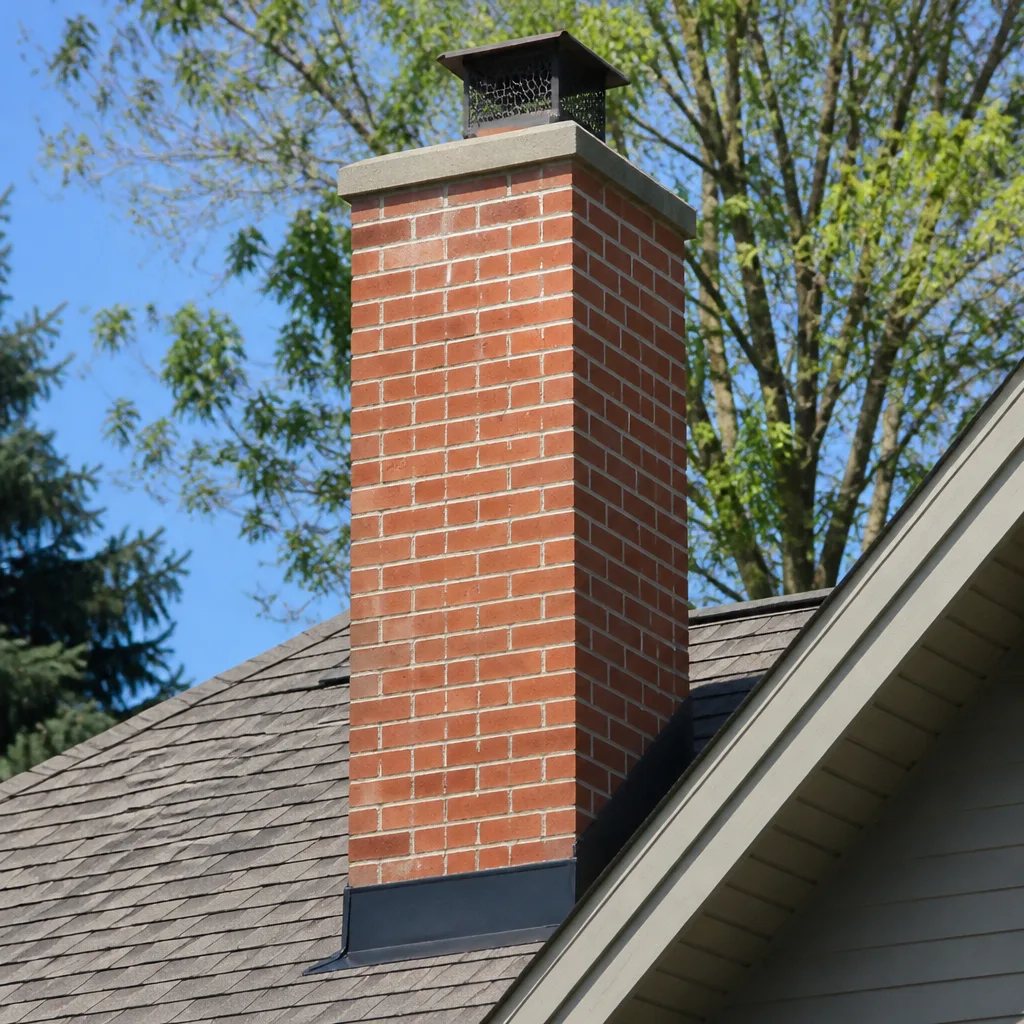 Masonry repair
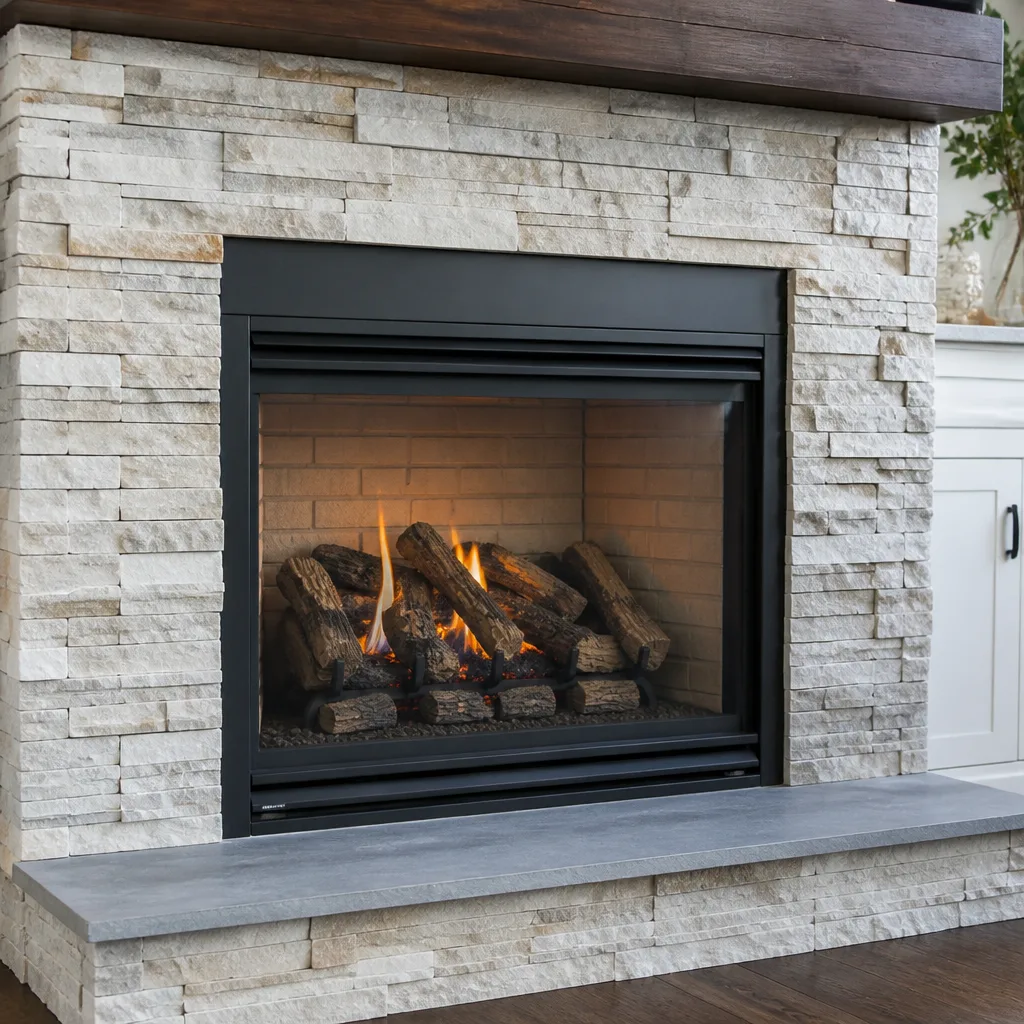 Gas fireplace service
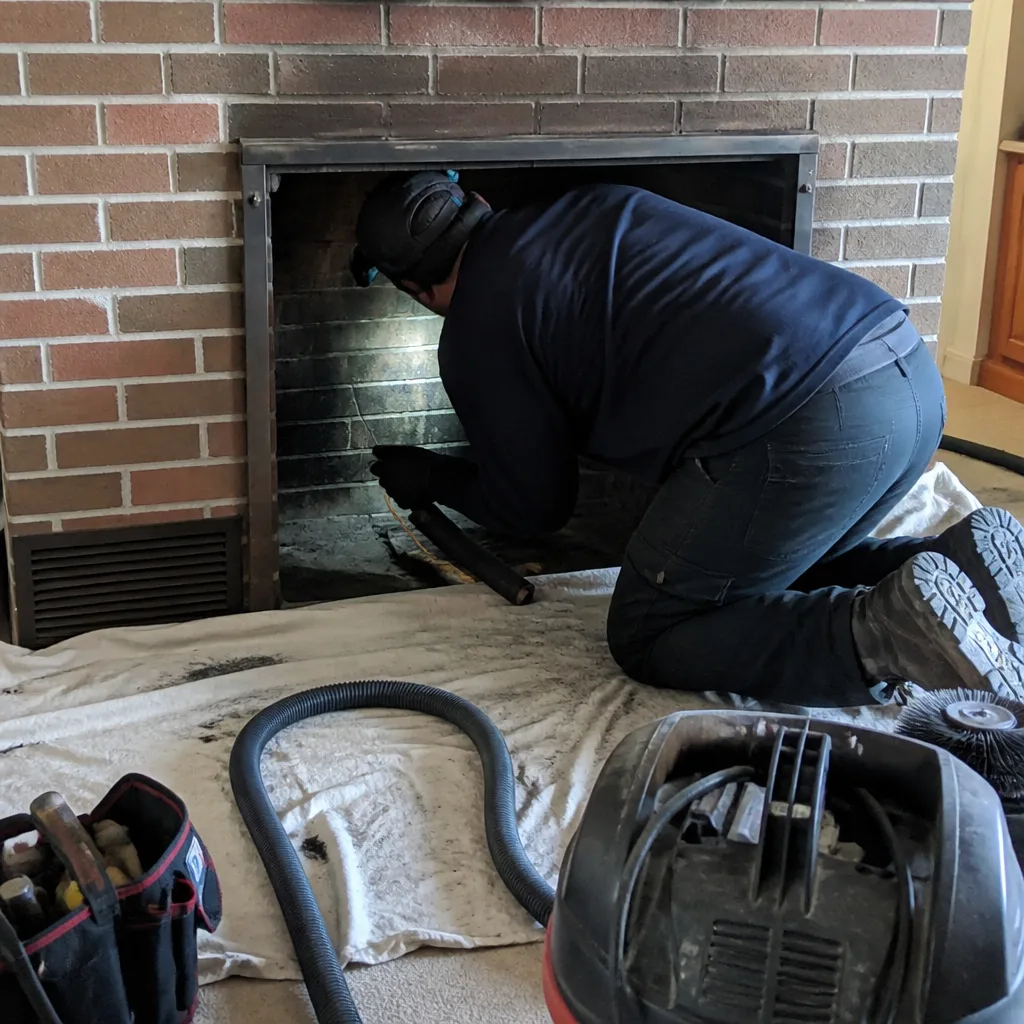
Level 1 sweep and inspection to the NFPA 211 annual standard - flue, crown, cap, and flashing checked and photographed
Chimney sweep logs do not sweep chimneys. They loosen some creosote - which then falls where a brush and vacuum still have to collect it.
Chimney Sweep Troubleshooting in Corona: Common Problems and How to Fix Them
Smoky backdraft on a cold morning usually isn’t a draft problem at all. It’s a pressure problem, and it comes from how tightly your house is sealed, not from how dirty the flue is. That distinction matters because it changes what you pay for. Homeowners in Corona call us convinced they need a sweep when the real fix is a make-up air source, or convinced a sweep will solve everything when the liner is cracked and no brush will ever touch the cause. This guide maps the cause-and-effect chain behind nine common chimney complaints here in Corona, so a symptom points you to the right repair instead of the most expensive one. We’ll separate draft failures from pressure failures, show you what you can spot yourself, and flag what needs a camera before anyone quotes you a liner.
Quick Answer
Most chimney problems in Corona fall into five categories: draft and pressure failures, moisture damage from freeze-thaw cycles, structural damage to the crown and flashing, liner and flue deterioration, and creosote buildup from restricted airflow. Diagnosis starts with separating flue-side problems (draft) from house-side problems (pressure), then confirming what you can’t see with a camera liner inspection. A professional sweep and inspection identifies which category you’re in before any repair is recommended.
Styles & brands we work with
- Sweep & inspection
- Caps & crowns
- Flue relining
- Masonry repair
- Gas fireplace service
Table of Contents
- Draft failure vs. pressure failure: the distinction nobody explains
- What each symptom actually points to
- How Corona’s freeze-thaw cycle damages brick and mortar
- What you can observe yourself vs. what needs a camera
- The decision tree: monitor, schedule, or stop using it
- The nine most common chimney problems, mapped
- Common mistakes to avoid
- When to call a professional
Draft Failure vs. Pressure Failure: The Distinction Nobody Explains
A chimney works because warm exhaust is lighter than the cold air around it, so it rises. That’s draft. It lives inside the flue. Pressure is different. It’s the balance between air leaving your house and air coming in, and it lives inside the house. When a chimney smokes, one of these two systems has failed, and they require opposite fixes. Confusing them is the single most expensive mistake in chimney troubleshooting.
Draft failure means the flue itself can’t pull. The causes are physical: a flue that’s undersized for the appliance, a blockage from a bird nest or fallen masonry, heavy creosote narrowing the passage, or a flue that’s too short to establish a strong column of rising air. These are flue-side problems. A sweep clears blockages and buildup, and a camera confirms whether the liner is intact.
Pressure failure means the flue is fine but the house won’t give it air to work with. Modern homes are built tight, with vapor barriers, sealed windows, and exhaust fans in kitchens and bathrooms that pull air out. When the house is sealed, the chimney competes for air and loses. Smoke gets pushed back down the flue instead of rising. That’s why a freshly swept chimney can still smoke on a cold morning in Corona.
How to tell which one you have:
- Smoke appears mostly on cold, still mornings or when a bath fan runs: pressure failure. The fix is make-up air, a slightly open window during start-up, or a draft-improvement cap.
- Smoke appears every time you burn, regardless of weather: draft failure. That’s a flue-side job, and it needs a sweep and inspection.
- Smoke appears only at start-up, then clears: usually a cold-flue problem. Pre-warming the flue with a rolled newspaper (held safely away from the damper) often solves it.
If you’ve had the chimney swept and it still smokes, stop paying for sweeps and get the pressure side looked at. The flue was never the problem. If you want the flue side verified first, a chimney inspection is the right starting point because it documents actual condition rather than guessing.
What Each Symptom Actually Points To
Homeowners in Corona describe symptoms. Chimney professionals see causes. The translation between the two is where most money gets wasted, so here’s the mapping between the complaint and what’s upstream of it.
- White staining on the chimney’s exterior: efflorescence, which is water-soluble salts pushed to the surface as moisture migrates through the masonry. The upstream cause is water getting in, usually through a failed crown, cracked mortar joints, or a missing or damaged cap. The staining is the messenger, not the problem. Repointing without fixing the water entry won’t stop it.
- Spalling brick (faces flaking off): the brick is saturating and freezing, and the expansion breaks the face off. This tracks directly to Corona’s freeze-thaw cycle and to failing flashing where the chimney meets the roof.
- Rust on the damper or firebox: chronic moisture inside the firebox. That’s rarely splash. It’s usually water coming down the flue from a missing cap, a cracked crown, or a deteriorated liner joint. Rust on metal parts inside the firebox is a water-intrusion alarm.
- Smoke stains above the firebox opening: backdraft or a weak draft pulling smoke into the room instead of up. Usually pressure or flue sizing.
- Falling brick or mortar from inside the flue: liner or interior masonry failure. Stop using the fireplace until a camera inspection confirms the flue is safe.
- A smell of smoke in the room when the fireplace isn’t in use: the flue is pulling cold air down and pushing fireplace odor into the room. Often a stuck damper or a flue with a weak pressure seal.
- Water in the firebox after rain: cap, crown, or flashing failure. Not a sweep job, a water-entry job.
- Creosote smell on warm days: creosote buildup in the flue, off-gassing when the chimney warms. A sweep is overdue.
- Loose mortar on the roof or in the firebox: the beginning of structural deterioration. Monitor and schedule, unless it’s inside the flue, in which case stop using.
Notice that eight of these nine have a cause outside the flue. Sweeping alone doesn’t fix any of them. The chimney repair work that follows diagnosis is what addresses the actual failure, and which work to schedule depends entirely on which cause the inspection confirms.
How Corona’s Freeze-Thaw Cycle Damages Brick and Mortar
Corona gets cold enough for long enough that masonry absorbs water and freezes repeatedly. This is the single largest driver of chimney deterioration here, and it produces failures you simply don’t see in warmer climates. In a mild climate, a chimney can look fine for decades because water soaks in and dries out quietly. In Corona, water soaks in, freezes overnight, expands, and pries the masonry apart from the inside. Repeat that cycle through a winter and the damage compounds.
The mechanisms to understand:
- Lime mortar is intentionally softer than the brick. That’s a feature. It sacrifices itself so the brick doesn’t crack. When masonry absorbs water, freezes, and expands, the mortar joint gives first. That’s why you’ll see crumbling mortar joints on a Corona chimney with intact brick faces, and it’s why repointing with a hard cement mix makes things worse: the brick ends up sacrificing itself instead.
- The crown is the most exposed surface. It’s a horizontal slab on top of the chimney that collects water and freezes hardest. A hairline crack in the crown lets water in, the freeze expands it into a real crack, and next thing you know water is in the firebox. Repairs we’ve done often start with the crown, not the flue.
- Flashing at the roofline is where water finds the path of least resistance. Flashing is the metal that seals the chimney to the roof. When it lifts, cracks, or was installed with the wrong material, water gets behind it and into the framing. This is a roofer-adjacent repair most general contractors do poorly on chimney work because they don’t treat flashing as a chimney-specific component.
- Spalling brick is the visible late stage. By the time brick faces are flaking, water has been freezing inside the brick for multiple seasons. The fix is not aesthetic; it’s stopping the water source first.
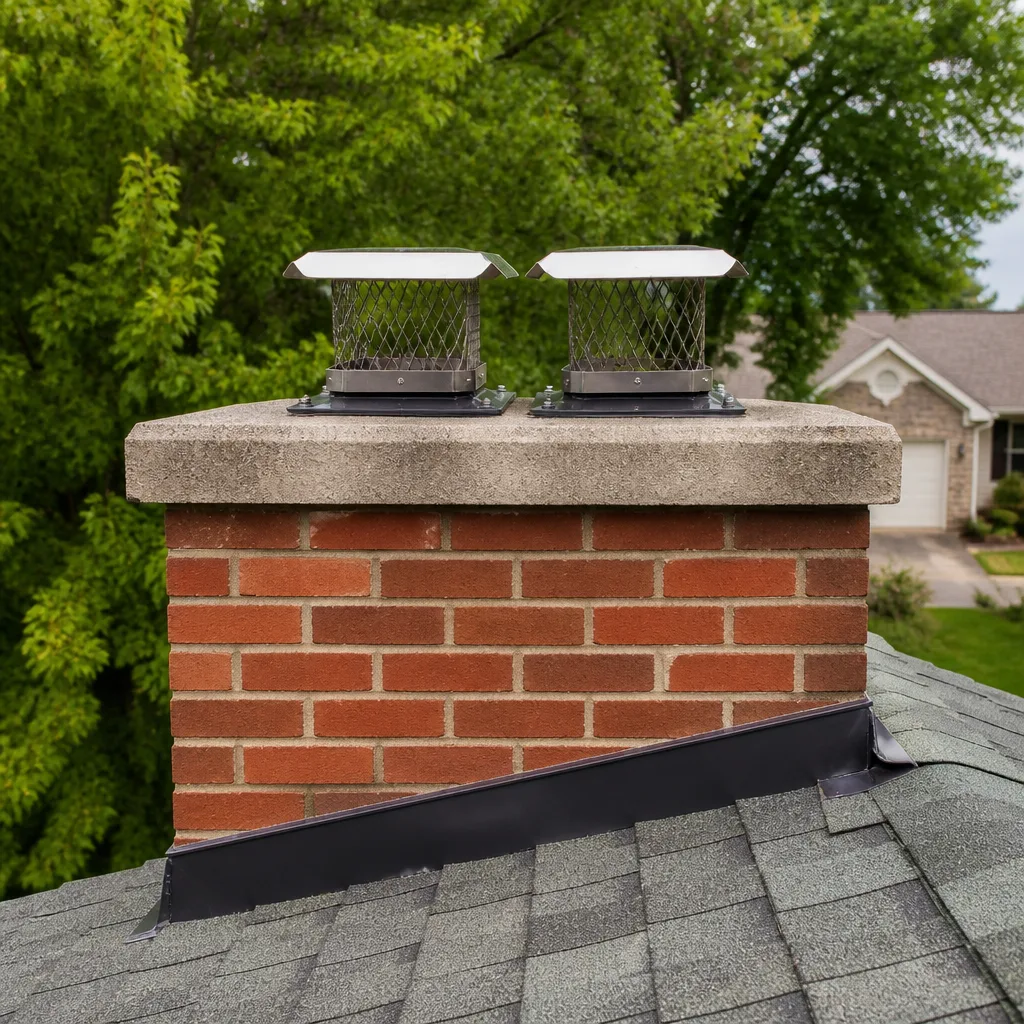
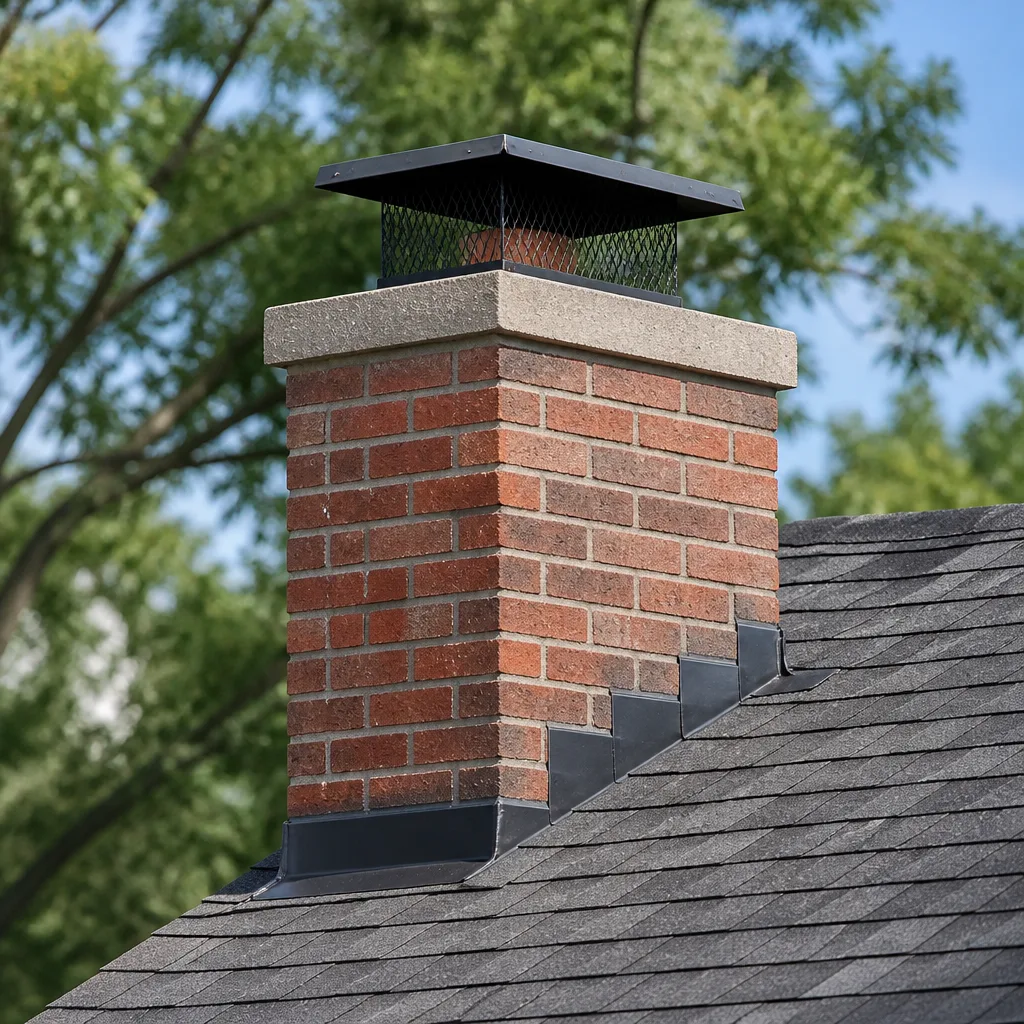
This is why we specify Famco and Gelco components for cap, crown, and flashing work. These are manufacturer-spec parts with traceable quality standards, not anonymous off-brand hardware, and it matters when the metal has to survive freeze-thaw cycles year after year alongside the masonry. Cap and crown work done right here is a moisture strategy, not a decoration. When we recommend a new chimney cap & crown, it’s because the crown is the top of the water-intrusion chain and a proper cap keeps rain, ice, and animals out of the flue mouth.
What You Can Observe Yourself vs. What Needs a Camera Liner Inspection
You can tell whether the interior of your firebox is rusting. You cannot tell whether your flue liner has a hairline crack halfway up. That gap is where homeowners get sold work they don’t need or talked out of work they do need. Here’s the honest line between what’s observable from the hearth and what requires a camera.
Observable during your own fireplace check:
- Damper operation. Open and close it. It should move freely and seal reasonably.
- Rust or corrosion on the damper, firebox walls, or firebox floor.
- Visible cracks in the firebox masonry or mortar joints.
- Efflorescence or spalling on the exterior chimney, if you can see it safely from the ground.
- The presence and condition of the cap and spark arrestor at the flue top, checked from the ground with binoculars.
- Creosote buildup visible just above the damper.
- Whether smoke stains appear above the firebox opening after burns.
Requires a camera inspection:
- Liner integrity along the full length of the flue. Cracks, gaps, and separated joints are invisible from the hearth.
- Creosote thickness at the top of the flue, where the fire burns hottest.
- Obstructions, bird nests, or fallen masonry inside the flue.
- Flue sizing and offset configuration, which determine whether draft can ever work properly.
- Whether a HeatShield liner restoration is a viable alternative to full liner replacement.
This is why we treat chimney inspection as a standalone service. An inspection is a starting point, not an upsell attached to a sweep. When you buy or sell a home in Corona, or want a real answer about what the flue looks like before you light the first fire of the season, the documented findings from a camera inspection are the only way to know. Without that evidence, any recommendation to spend money on a liner is a guess.
The Decision Tree: Monitor, Schedule, or Stop Using It Now
Not every problem is an emergency. Some are use-at-your-own-risk, some are stop-using-immediately, and some are monitor-and-schedule. Getting the category right protects your safety without pushing you into spending you don’t need to spend. Here’s our decision tree, in the order we’d actually apply it.
- Is there visible fire? Stop. That’s not a troubleshooting situation. Call the fire department, then call us after.
- Are there signs of flue-side failure? Cracked firebox, falling brick or mortar inside the flue, smoke stains above the opening, a rusted-through damper. Stop using the fireplace immediately. Do not light another fire until a camera inspection confirms the flue and firebox are sound. A comprehensive inspection confirms whether it’s the shape of the flue, a broken liner, or a damper problem.
- Are there signs of pressure-side failure? Smoke only on cold mornings, or only when bath fans run. Use-at-your-own-risk, with a fix: crack a window near the fireplace during start-up and see if the smoke clears. If it does, schedule a fix for the pressure side.
- Are there signs of moisture intrusion? White staining, spalling brick, water in the firebox, rust or mold. This is monitor-and-schedule. Not dangerous today, but the damage compounds through every freeze-thaw cycle. Get it on the calendar before winter.
- Are there signs of creosote buildup? Creosote smell on warm days, visible buildup above the damper, a slow-burning fire that smokes at the top. This is schedule. The buildup creates fire risk in the flue. Get a chimney sweep booked.
- Have you had the fireplace more than a year without an inspection? Schedule. It’s cheap compared to what you’d spend fixing a problem you didn’t know about. It’s the first thing to do before lighting this season’s first fire.
- Do you have all seven of the above under control and a clean inspection within the year? Monitor. Keep burning, keep an eye out, and re-check at the start of each season.
One note on the safest-ever answer: if you can’t tell which category you’re in, treat it as category two. That’s the one that costs the least if you’re wrong.
The Nine Most Common Chimney Problems in Corona, Mapped to Their Causes
This is the heart of the troubleshooting: what the symptoms look like, what actually causes them in Corona, and what the fix requires. We’ve grouped them by failure category so you can use the decision tree above against this list.
1. Smoky backdraft on cold mornings
Cause: pressure failure, not draft failure. Tightly sealed homes in Corona compete for air. Fix: make-up air, a slightly open window during start-up, or a draft-improvement cap. Not solved by sweeping.
2. Smoke at every fire, regardless of weather
Cause: draft failure. Undersized flue, blockages, or a short flue that can’t establish a column. Fix: sweep for blockages, camera to confirm liner integrity, and check flue sizing before assuming a liner job is needed.
3. White staining on exterior brick
Cause: efflorescence from moisture migrating through masonry. Fix: identify and stop the water source. That’s usually the crown, flashing, or mortar joints. The staining stops when the water does.
4. Spalling brick faces
Cause: water saturation followed by freeze-thaw expansion breaking the brick face off. Fix: stop the water source first, then replace the failed bricks. Do not repoint with hard mortar.
5. Rust on the damper and firebox
Cause: chronic moisture inside the firebox, usually from a missing or damaged cap, a cracked crown, or a deteriorated liner joint. Fix: cap and crown restoration plus flashing work, then re-check the firebox condition.
6. Water in the firebox after rain
Cause: cap, crown, or flashing failure. Fix: restore the crown, reseal or replace the flashing, install or replace the cap. This is the moisture-intrusion category from the decision tree.
7. Creosote odor and visible buildup
Cause: creosote accumulation in the flue from restricted airflow or burning unseasoned wood. Fix: a sweep, plus airflow correction if the flue is undersized.
8. Cracks in the firebox or a rusted-through damper
Cause: heat stress and moisture combined. Fix: firebox rebuild or liner repair. This is a stop-using-immediately category until inspected.
9. Liner deterioration, cracks, and gaps
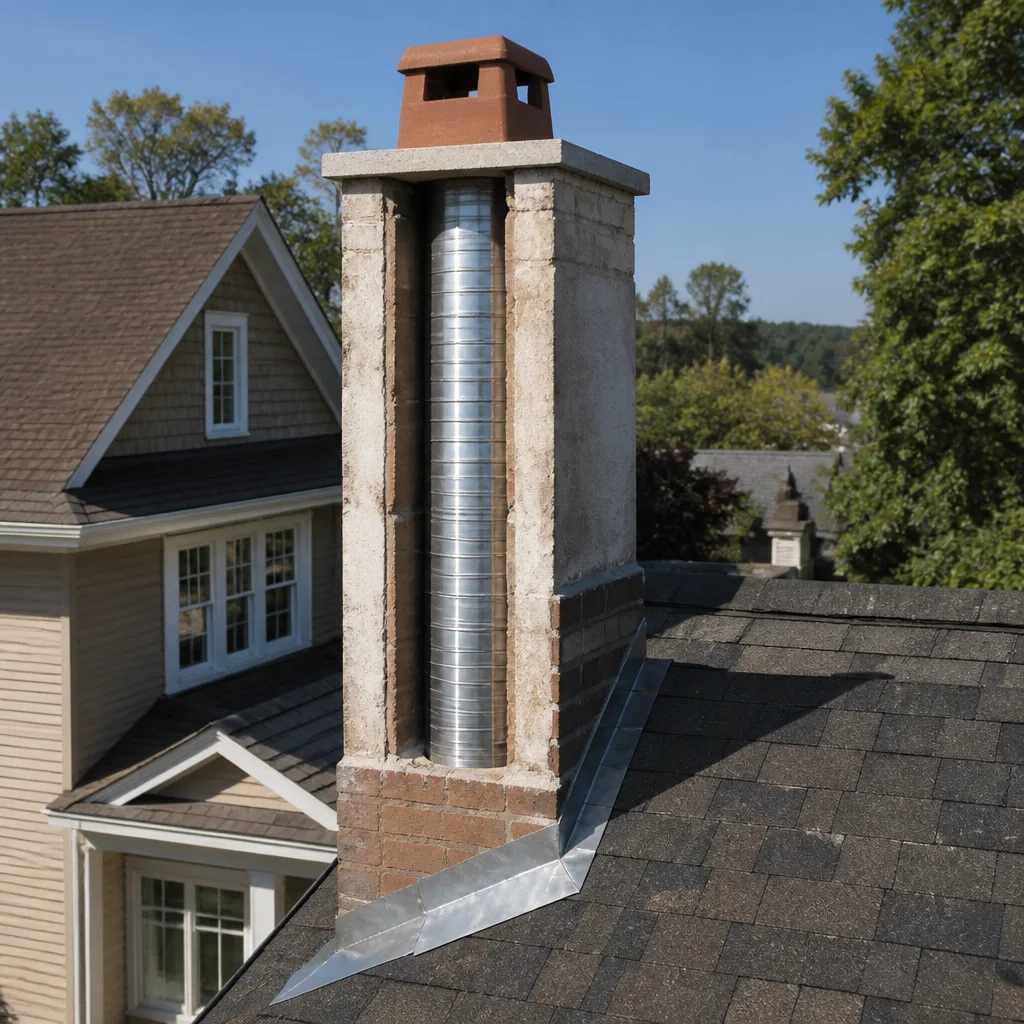
Cause: age, moisture, and repeated thermal cycling. Fix: depends on the flue’s condition. Sometimes a HeatShield liner restoration is viable; sometimes the right answer is a DuraFlex liner replacement. The right liner solution depends on your flue’s condition, which is why we don’t quote one without a camera.
Notice that number nine is the one homeowners hear the most about and know the least about. A restored liner via HeatShield is a specialized process that many general contractors aren’t trained or equipped to apply, and it’s often a cost-conscious alternative to full liner replacement when the flue condition allows. A full replacement with DuraFlex is the answer when the liner can’t be restored. Both are legitimate. The lie is telling a homeowner they need the expensive one without evidence.
Common Mistakes to Avoid
- Assuming backdraft means a dirty flue. It usually means a pressure problem. Sweeping a pressure problem never fixes it, and you’ll keep paying for sweeps that don’t work.
- Repointing with hard cement mortar. Hard mortar doesn’t move with the brick, so the brick cracks instead of the joint. A Corona chimney needs lime-based mortar for the freeze-thaw cycle, and hard cement looks fine for one season before it starts damaging the masonry.
- Ignoring rust on the damper. Rust inside the firebox means water is getting in, usually from the cap or crown. The rust doesn’t fix itself and the water source keeps damaging the firebox.
- Buying a new liner without a camera inspection first. No camera evidence, no recommendation worth trusting. A camera liner inspection is what separates the real problem from a sales pitch.
- The cheap anonymous cap or crown. Off-brand caps and crowns don’t carry the manufacturer specs that matter when they have to survive Corona winters. We specify Famco and Gelco components for exactly this reason. Traceable hardware holds up.
- Treating the chimney as a single, isolated problem. Water entry at the crown causes spalling brick at the exterior, which causes rust in the firebox, which leads to liner damage. The fix has to address the chain, not each symptom in isolation.
- Skipping the annual inspection because nothing is smoking. Smoking is a late-stage symptom. A camera inspection catches liner cracks, failing flashing, early spalling, and creosote buildup long before they announce themselves with smoke.
See the difference
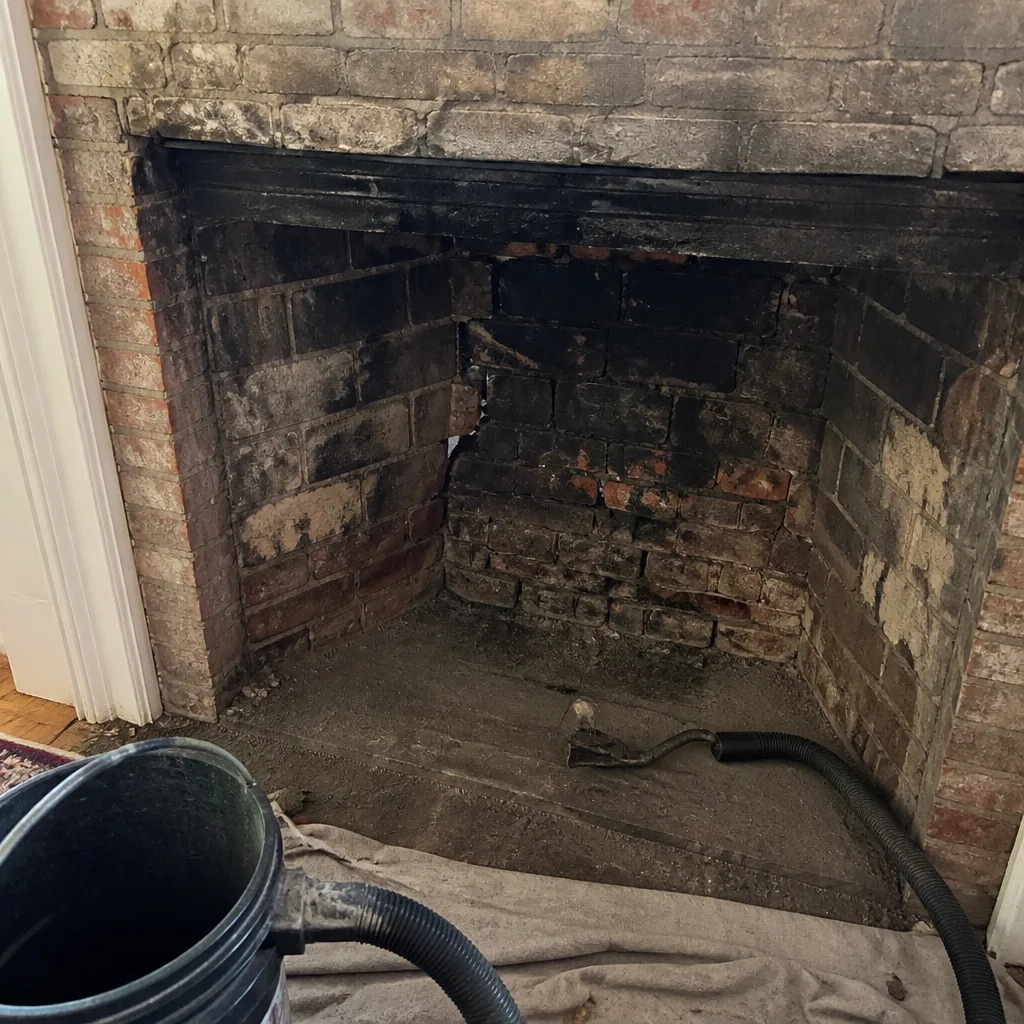 Before
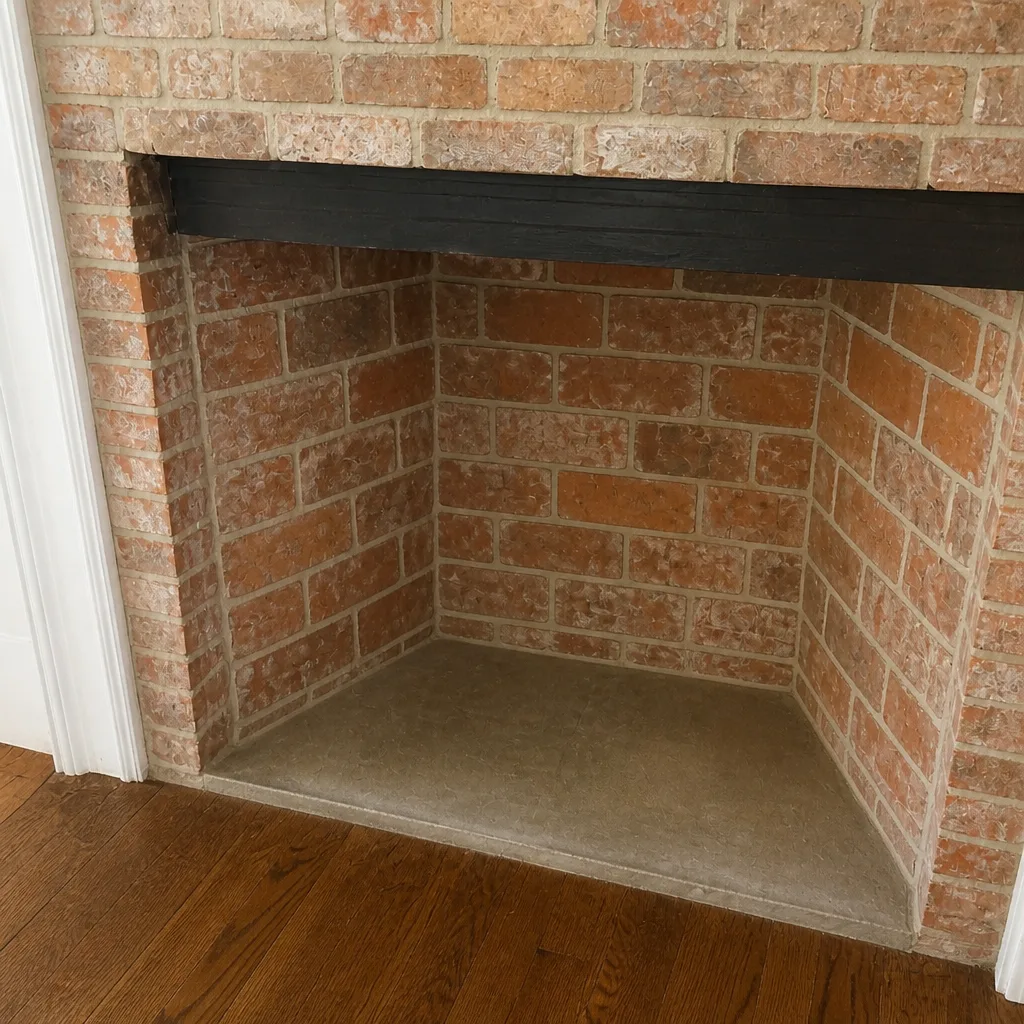 After
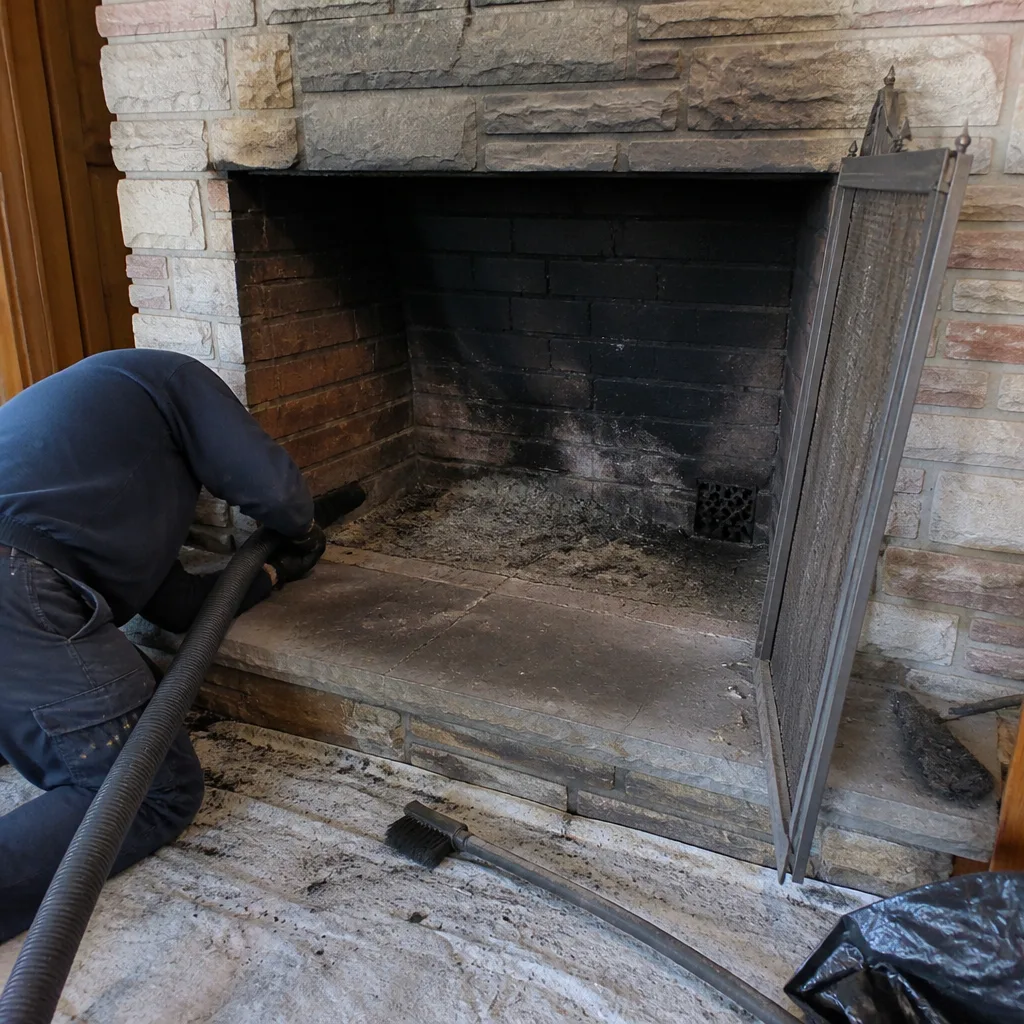 Before
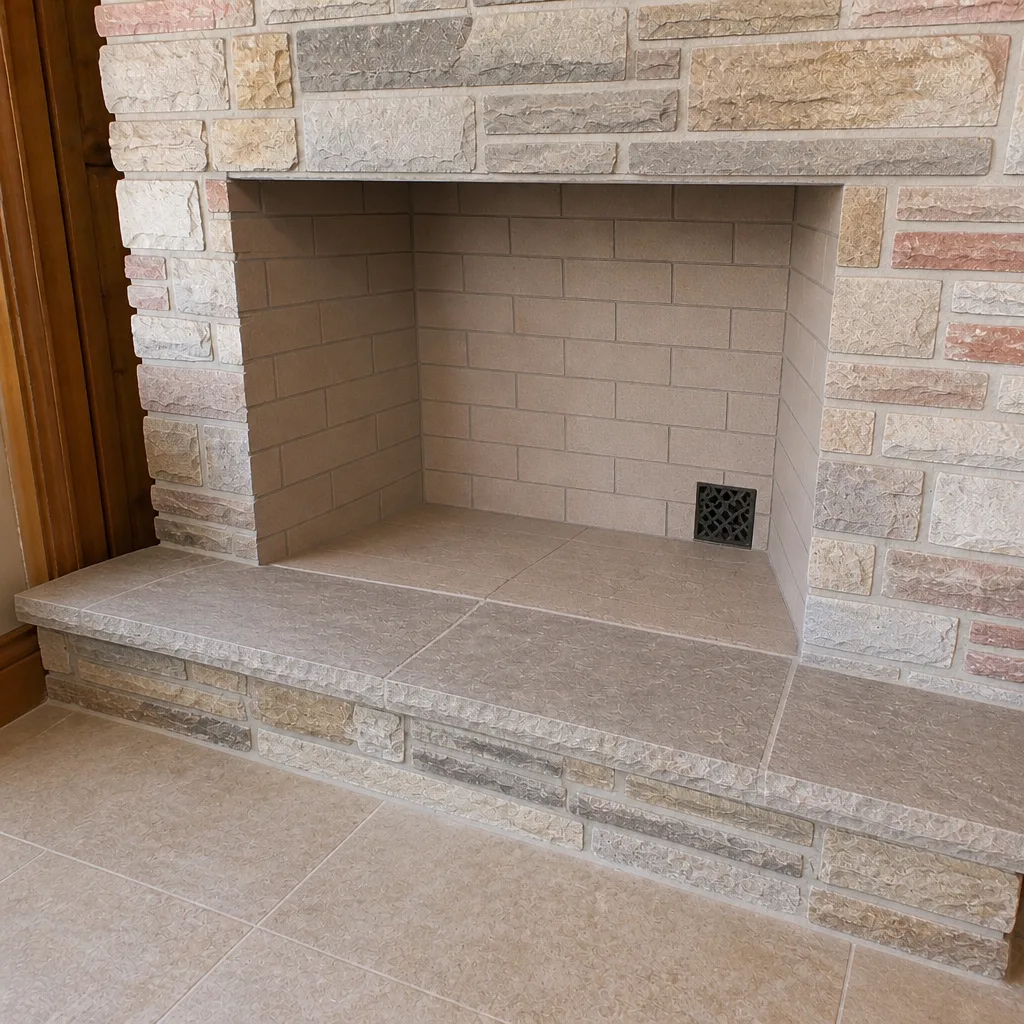 After
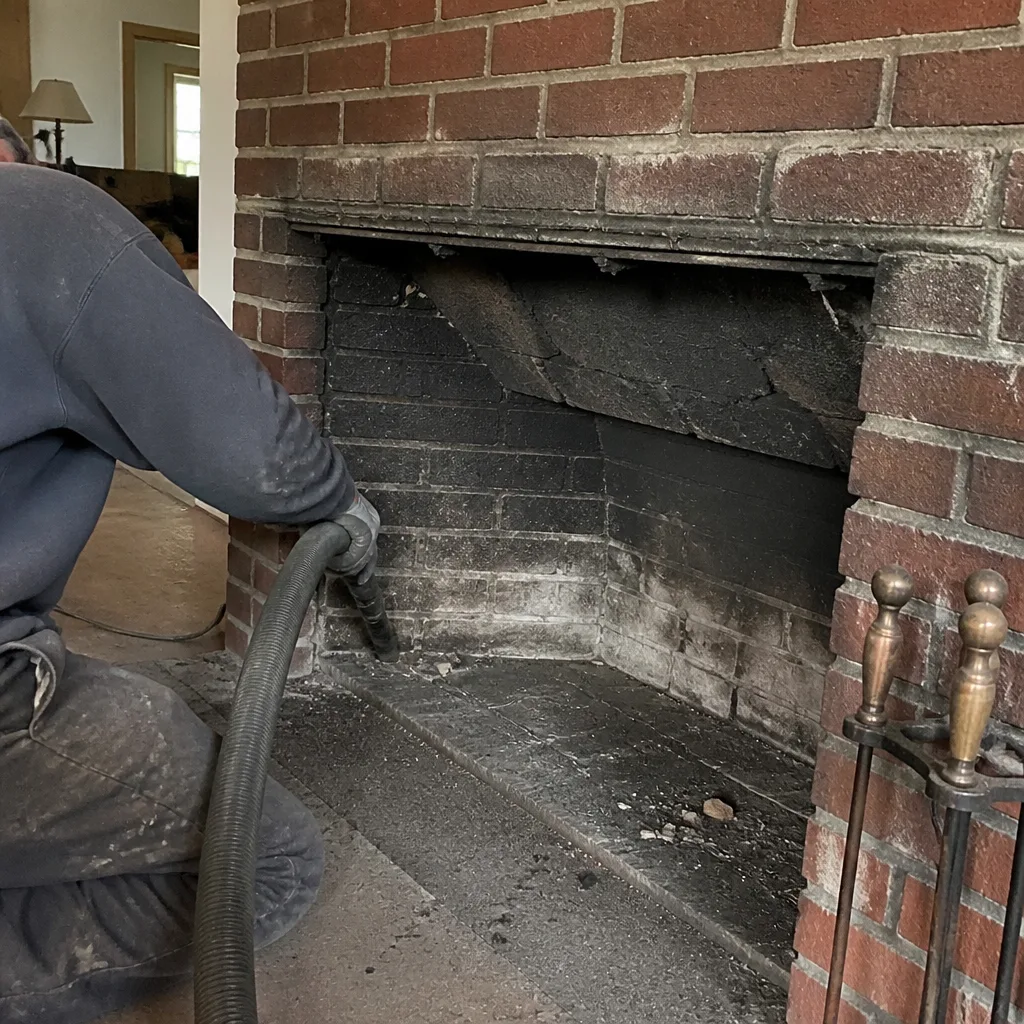 Before
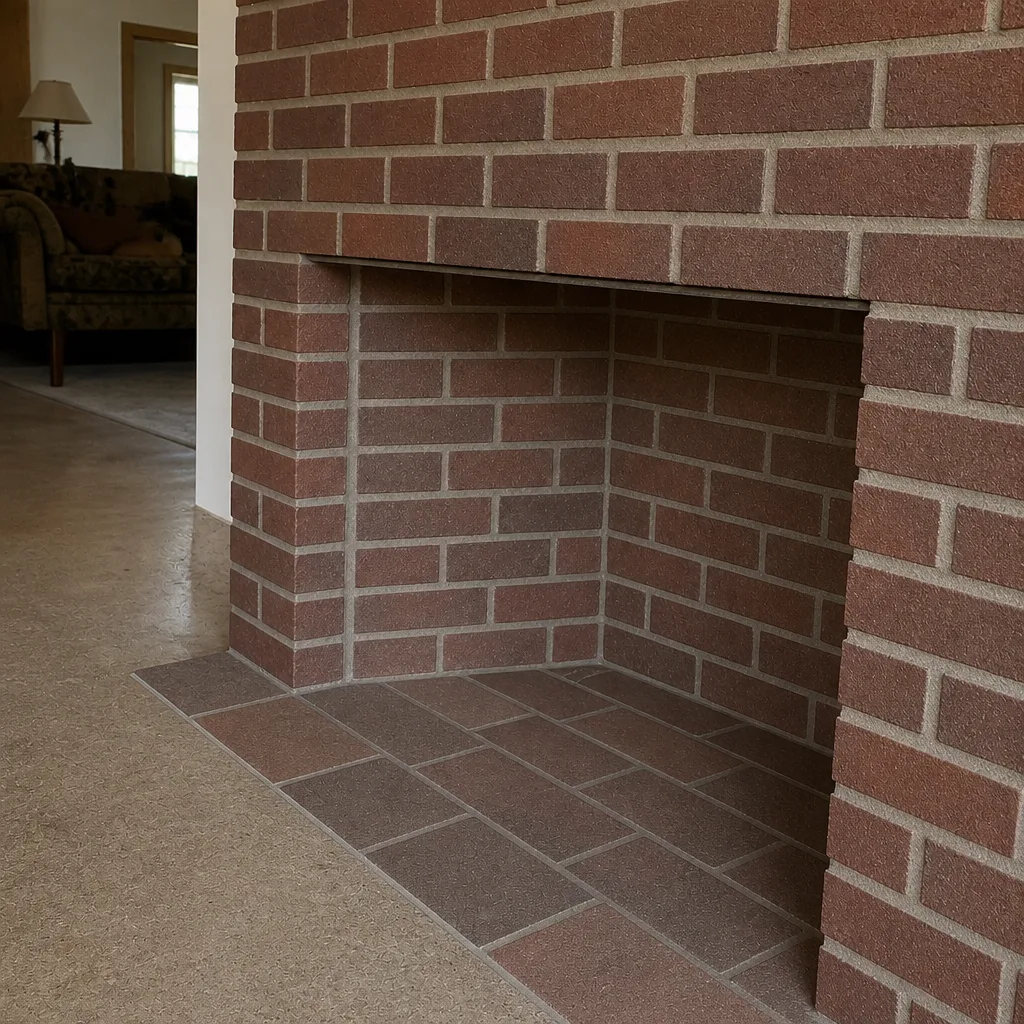 After
When to Call a Professional
Call a professional when any of these is true: there’s visible smoke or fire where it shouldn’t be, you see or smell creosote, the firebox shows cracks, the firebox floor feels soft or rusted through, water has entered the firebox, brick or mortar has fallen inside the flue, the backdraft won’t resolve with a cracked window, or the chimney hasn’t been inspected in over a year. Those are the situations where a trained eye or a camera inspection saves you from a repair you can’t see. A chimney sweep alone does not confirm these; a documented inspection does. We’ve been doing both across Corona and the surrounding neighborhoods for years, and we’ve yet to meet a chimney problem that a camera and a fair estimate can’t diagnose. If you’re in doubt about which category you’re in, that’s not a reason to wait. Chimney Sweep Corona offers free estimates in Corona – call (833) 968-1177.
The Full-System View: Why the Fix Has to Start at the Crown
A chimney is a system, and system failures chain together. Water enters at the crown because the cap is missing, the flashing has lifted, or the mortar joints have opened. The water reaches the masonry, saturates it, and freezes. The freeze expands, spalls the brick, and cracks the mortar. The water continues down and reaches the flue liner, where it rusts the metal liner or washes the mortar joints. The liner develops gaps, and the next fire heats those gaps. Meanwhile, the firebox rusts from the moisture, the damper sticks, and the creosote buildup that started as airflow restriction gets worse.
This is why we push back on the phrase “just fix the liner.” A liner repair addresses the symptom at the top of the chain, but if the water entry at the crown is still there, the repair fails again within a season or two. The crown, the flashing, and the cap are the entry points; the liner and the firebox are where the consequences show up. From the crown to the firebox, one contractor with one accountable view of the whole system is what prevents the repair-and-repair-again cycle. That’s the reason we cover sweeping, inspection, cap and crown, chimney repair, and fireplace repair under one roof, and the reason we specify professional-grade materials by name: Olympia Chimney for chimney system components, DuraFlex for liner replacement, HeatShield for restoration, and Famco and Gelco for the cap and crown hardware that has to survive Corona winters.
Frequently Asked Questions
The most common chimney problems in Corona are smoky backdraft from pressure failures, moisture intrusion that causes white staining and spalling brick, cap and flashing failures that let water into the firebox, creosote buildup, and liner deterioration. Corona’s freeze-thaw cycle makes water intrusion the leading cause of the structural problems, which is different from what you see in a warmer climate.
Your chimney is almost certainly experiencing a pressure problem, not a draft problem. Corona homes are tightly sealed, and cold morning air can’t get in to replace the air leaving through the flue. Crack a window near the fireplace during start-up. If the smoke clears, the flue is fine. If it doesn’t, call (833) 968-1177 for an inspection – estimates are free.
It depends entirely on your flue’s condition, and the only way to know is a camera liner inspection. If the flue is structurally sound but weathered, HeatShield liner restoration is often a cost-conscious alternative to full replacement. If the liner is failing or the flue is compromised, a DuraFlex liner replacement is the right call. Nobody can tell you which without seeing inside.
White stains are efflorescence, which is salts pushed to the surface by moisture moving through the masonry. The upstream cause is water getting in, usually through a cracked crown, failing flashing, or open mortar joints. The staining is the symptom; stopping the water entry is the fix, and repointing without addressing the source won’t stop it. Call (833) 968-1177 if you want it evaluated.
A chimney should be inspected at least once a year, and before lighting the first fire of the season if it’s been more than a year since the last inspection. In Corona, the freeze-thaw cycle and the seasonal use pattern mean an annual camera inspection is the most reliable way to catch liner cracks, moisture damage, and creosote before they compound into structural repairs.
Water intrusion compounds with every freeze-thaw cycle, so a small crown crack becomes spalling brick, then rusted firebox, then liner damage. Creosote buildup compounds with every fire, which raises the risk of a flue fire. Problems in the stop-using category are the ones where waiting is genuinely dangerous. Monitor-and-schedule problems can safely wait a few weeks, but not a whole season. Call (833) 968-1177 to get yours assessed.
The Bottom Line
Most chimney problems in Corona are diagnosable symptoms with specific, fixable causes, and the fix usually starts with a proper inspection, not a sweep. Backdraft is a pressure problem, not a draft problem. White staining and spalling brick are water entry, not old age. Rust on the damper points upstream to a failed cap or crown. And a new liner quote without camera evidence is a guess. Use the decision tree to sort your situation into monitor, schedule, or stop using. Then get a documented inspection from a company that handles the whole system from the crown to the firebox. If you’re in Corona and dealing with any of these, we’re ready. Call (833) 968-1177 for a free estimate. We answer 24/7. Fast dispatch from 7am to 7pm, Sunday through Friday.
Written by the team at Chimney Sweep Corona.