
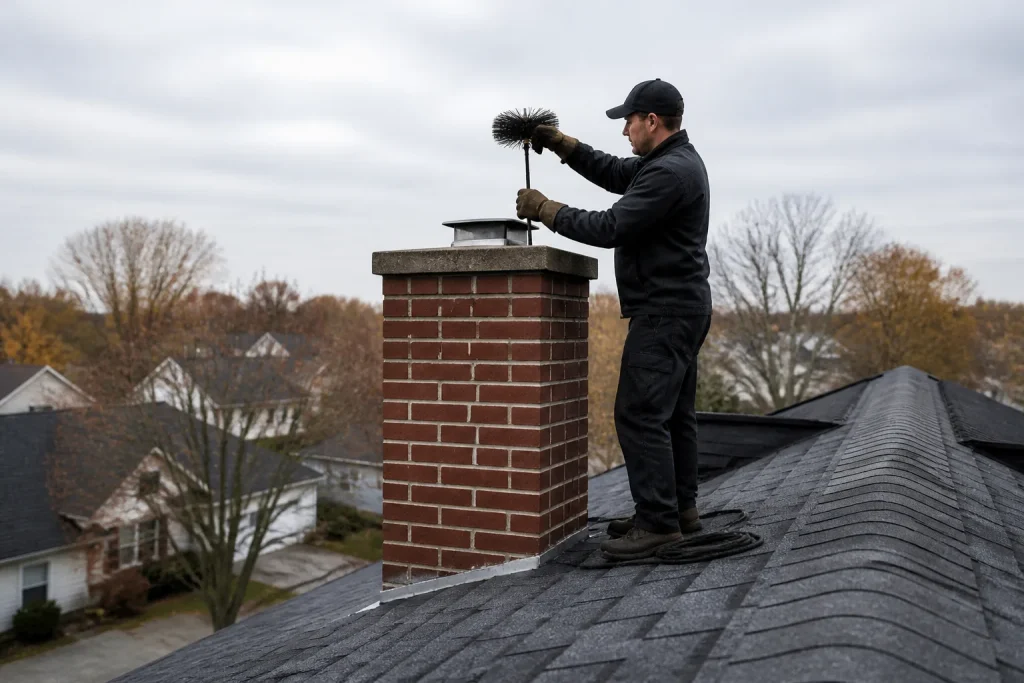
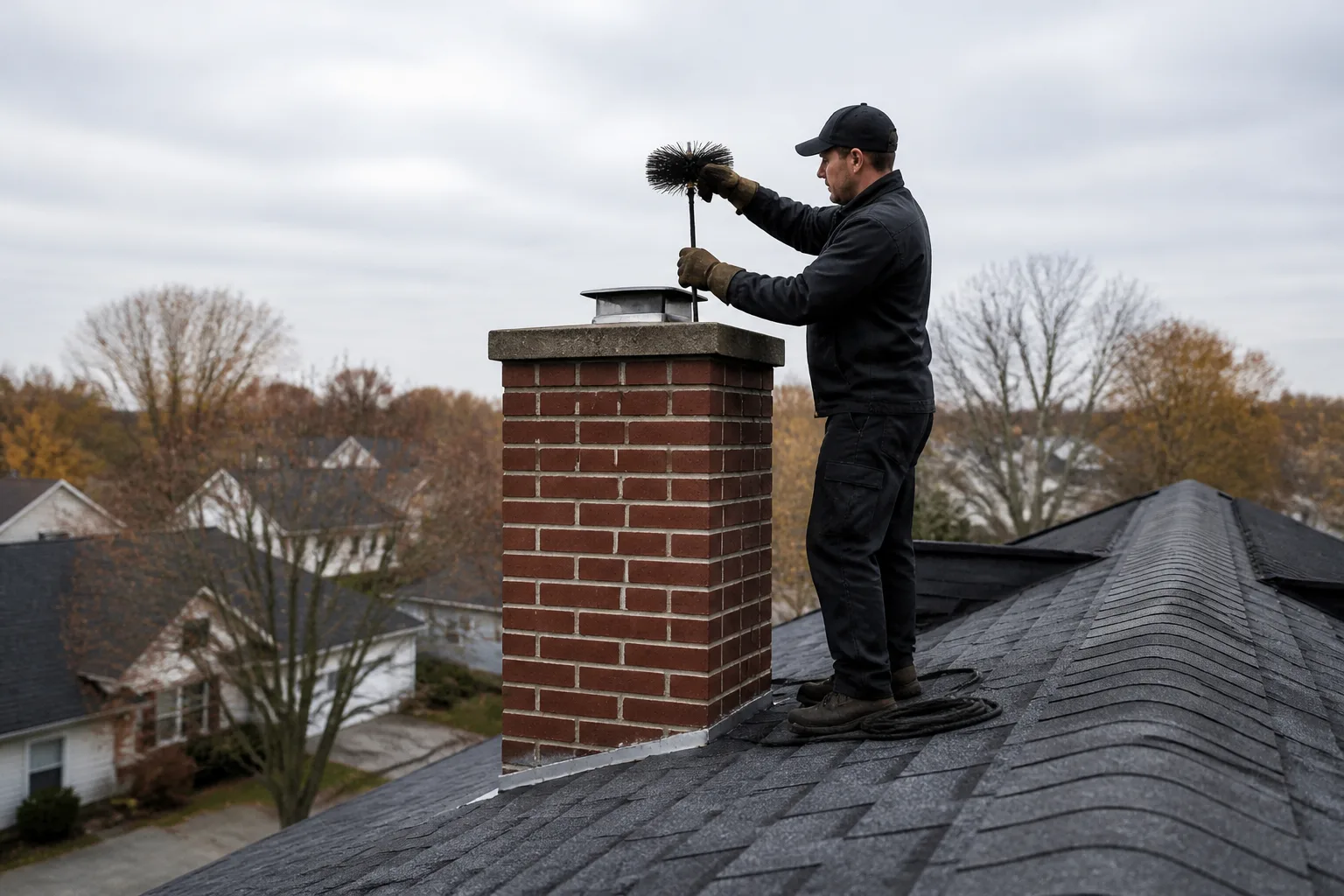
Top Signs You Need Chimney Cleaning Service – Don’t Ignore These
A strong draft and no smoke spilling into the room feels like proof your chimney is fine. It isn’t. Third-degree glazed creosote, the type most likely to ignite, is nearly odorless and invisible from the firebox opening. Most of the “signs you need a sweep” lists floating around are recycled home-maintenance filler that misses the indicators a trained eye actually watches for. Below are the signals worth taking seriously in Corona, and what each one tells you about your flue. If you’d rather not climb up and guess, call (833) 968-1177.
Key Takeaways
- A clean-looking firebox says nothing about what’s coating the flue above it.
- Glazed creosote can build with almost no smell and no visible smoke.
- Exterior clues like efflorescence and receding mortar point to moisture, not just wear.
- Gas inserts have their own warning signs that wood-burning lists never mention.
- Headaches or eye irritation during a fire are a carbon monoxide signal, not a coincidence.
What Most “Signs You Need a Sweep” Lists Get Wrong
The usual advice tells you to watch for smoke in the room, a weak draft, or a dirty firebox. Those are real, but they’re late-stage. By the time smoke backs up or you can smell soot in the living room, the flue has often been loading up for a while. In our experience, the earliest reliable signals show up as deposits you can’t see from the hearth, moisture patterns on the masonry, and small changes in how the fireplace behaves compared to last season.
Creosote is the reason. It’s the tar-like residue left when wood smoke cools against the flue walls, and it doesn’t arrive all at once. It builds in stages, and each stage changes both the risk and the cleaning method. A trained inspection distinguishes between them, which is why a proper assessment beats a visual peek. Our team specifies professional-grade components from brands like DuraFlex when a liner or flue component needs attention, because the material has to match the condition we actually find.
What does a strong draft with no smoke actually mean? It means the fire is drawing right now, at this hour, under today’s conditions. It does not confirm the flue is free of buildup, and it says nothing about buildup sitting higher up the pipe where you can’t reach. That gap between “works today” and “safe all season” is where most avoidable chimney problems begin.
The Three Stages of Creosote – and Why Stage 3 Is the Sneaky One
Creosote forms in three recognizable stages, and the third is the hardest to catch by smell or a glance into the firebox. Stage 1 is a flaky, soot-like dust that brushes away easily. Stage 2 is a crusty, tar-like layer that clings to the flue and needs proper sweeping with the right tools. Stage 3 is glazed creosote: a hard, shiny, glassy shell fused to the flue wall. That shell is the type most closely tied to chimney fires, and it forms where heat and unburned gases have been concentrated.
Here’s the paradox. Stage 1 and Stage 2 give off the sooty odors and loose debris that tip homeowners off. Stage 3 seals itself to the surface. It doesn’t shed, it doesn’t smell strongly, and you’ll never see it standing at the firebox opening looking up. A hot, efficient fire can actually encourage it by driving more gases to cool and condense higher in the flue. So the fireplace that “seems to be burning great” is exactly the one where glazed creosote can hide.
Glazed creosote doesn’t respond to a simple brush. It often needs mechanical or chemical treatment, and sometimes the flue condition calls for a restoration approach like HeatShield rather than a full replacement. The right call depends on your flue’s condition, not a one-size-fits-all rule.
Firebox signals worth checking
- Loose flakes or a crusty buildup along the flue walls above the damper.
- Soot staining on the fireplace face that wasn’t there before.
- A flattened feel to the draft compared to early in the season.
- A hard, mirror-like sheen on any visible flue surface, which means call a pro, not a brush.
Exterior Warning Signs Homeowners Walk Past
Some of the clearest evidence your chimney needs attention is on the outside of the house, and most people stroll right by it. Here’s what to actually look for the next time you’re in the yard or on the roof line:
- Efflorescence. A white, chalky stain on the chimney’s brick or mortar. It’s salt drawn to the surface by moisture moving through the masonry, a sign water is getting in somewhere.
- Receding or crumbling mortar joints. The mortar between bricks should sit nearly flush. If it’s hollowed out or sandy, the joints are failing and water has an easier path inside.
- Cap displacement. A shifted or tilted chimney cap lets water pour straight into the flue. Cap and crown problems are a leading cause of interior damage that starts at the top and works down.
- Cracked or spalling brick. Flaking brick faces or cracks that open wider over a season point to trapped moisture and freeze-thaw stress.
We use Famco and Gelco components for cap, crown, and flashing work because these are manufacturer-spec parts with traceable standards, not anonymous hardware that may not fit or last. When exterior signs show up, the fix usually starts with stopping the water and then assessing the flue from the inside out, from the crown to the firebox.
A Compromised Damper Seal Means Water Is Getting In
If your damper no longer seats snugly, or you can feel cold air leaking down when the fireplace is closed, that’s not just a comfort issue. A failing damper seal lets outside air and moisture into the flue, and moisture is the quiet accelerator of flue deterioration. Water vapor condenses on the flue walls, combines with creosote and acidic residues, and eats at the lining from the inside. Over time that means cracked liner tiles, rusted components, and a flue that’s harder and more expensive to put right.
The link is easy to miss because the damper is small and out of sight. But an air leak at the damper often shows up in other ways first: rust flakes falling into the firebox, a musty smell between fires, or a drafty feel in the room even when nothing’s lit. We specify Olympia Chimney components for parts of the system where fit and material matter, because a proper seal is what keeps the moisture cycle from restarting after a repair.
A chimney inspection isn’t an upsell here. It’s the starting point that tells you whether you’re dealing with a worn gasket, a misaligned damper, or moisture that’s already reached the liner. You can’t fix what you haven’t confirmed.
Gas Fireplace Inserts Have Their Own Warning Signs
Wood-burning lists leave out gas inserts entirely, yet they fail in their own distinct ways. If you have a gas insert, watch for these:
- Soot on the glass. A light haze is normal; a dark, heavy soot film means the flame isn’t burning cleanly, often a sign of blocked venting or wrong air mixture.
- Pilot irregularities. A pilot that won’t stay lit, flickers oddly, or needs repeated relighting can indicate vent restriction or debris in the burner.
- Vent restriction indicators. Poor flame shape, a lazy orange flame instead of a steady blue one, or the unit shutting down on its own all point to a venting problem that needs eyes on it.
- Odor or haze in the room. Any persistent smell or film on nearby surfaces is worth a professional look, not a fresh-air fix.
Gas inserts don’t produce creosote the way wood does, but they still have a flue and venting that has to be clear and correctly sealed. In our experience, homeowners assume a gas unit is maintenance-free, and that assumption is how restricted vents go unnoticed for seasons. When the venting or surrounding chimney structure needs repair, the same professional-grade materials apply, and Coronado-area homeowners get the same assessment we’d give any wood-burning setup.
The Indoor Air Signal Most People Dismiss
A persistent low-level headache, or eye and throat irritation that shows up only when the fireplace is running and fades when it isn’t, is a carbon monoxide precursor worth taking seriously. It’s subtle by design. Low-level carbon monoxide exposure doesn’t announce itself with dramatic symptoms; it hums along as a dull headache, fatigue, or scratchy eyes that you’re likely to blame on a long day. The pattern is the clue: symptoms that track with fireplace use, then ease when the fire’s out.
This doesn’t mean every headache during a fire is CO, but it does mean the pattern earns a professional look. Poor draft, a blocked flue, or a compromised vent can let combustion gases back into living space instead of up and out. Carbon monoxide risk is the main reason we treat chimney work as a safety service, not cosmetic upkeep, and why we don’t wave off a “just a little headache” complaint. It’s also why a chimney inspection as a standalone, documented assessment matters: you get real findings instead of a guess.
If something feels off, stop using the fireplace and get it checked. That’s the safe move, every time.
When to Call a Pro (and What to Expect)
If you’ve noticed any of the signs above, or you simply can’t remember the last time the flue was inspected, that’s the moment to bring someone in. Some of what we’ve described is genuinely a professional call: glazed creosote, moisture damage, a compromised liner, or any CO-type symptom. These involve heights and structural assessment, and the risk of getting it wrong isn’t worth the DIY savings.
Here’s how a visit usually goes locally. A sweep clears loose soot and debris, while an inspection documents the condition of the full system with findings you can review. Nothing gets recommended without evidence you can see for yourself, and we’ll tell you plainly when work can safely wait. Our technicians have up to 9 years of experience, and every job is scoped and priced by a written estimate.
Related services in Corona
Depending on what turns up, the next step might be a routine chimney sweep, chimney cap & crown work to stop water intrusion, or chimney repair for structural issues. For a full rundown of what Chimney Sweep Corona handles, start there.
The Bottom Line
The signs that matter most are the quiet ones: invisible glazed creosote, exterior moisture clues, a leaking damper, gas-insert vent problems, and that nagging headache during a fire. Catching them early is what separates a routine sweep from a structural repair bill. Trust your pattern-spotting instincts, act before the season’s first fire, and get a documented assessment you can actually see. If you’re in Corona and need help, Chimney Sweep Corona offers free estimates – call (833) 968-1177. We answer 24/7, with fast dispatch from 7am to 7pm, Sunday through Friday.
Frequently Asked Questions
Your chimney likely needs cleaning if you have visible creosote buildup, exterior clues like efflorescence or receding mortar, a damper that won’t seal, or symptoms during fireplace use. The most reliable way to know is a professional inspection, since the dangerous glazed creosote can’t be seen from the firebox. Call (833) 968-1177 for a free estimate.
Yes. Glazed, third-degree creosote fuses to the flue wall, gives off little smell, and often produces no smoke in the room. A clean-looking firebox tells you almost nothing about the coating above it. That’s exactly why we recommend an inspection over a visual glance, and why our findings are documented for you to review. Call (833) 968-1177 to book one.
Gas inserts don’t build creosote like wood fires, but their venting and the surrounding flue still need to be clear and correctly sealed. Soot on the glass, pilot problems, or a lazy flame can signal vent restriction. If you see those, get it checked rather than shrugged off. Call (833) 968-1177 for an assessment.
A headache or eye irritation that appears only when the fireplace runs and eases when it’s out can be a carbon monoxide precursor worth taking seriously. Stop using the fireplace and have the system checked. Don’t wait it out. Call (833) 968-1177 and we’ll help you get it looked at.
Written by the team at Chimney Sweep Corona.
Need Chimney Cleaning Help?
Call Chimney Sweep Corona - the local pro we connect you with is licensed and insured, with free written estimates in Corona.
(833) 968-1177