
Chimney Sweep: Repair or Replace? How Corona Homeowners Decide
The repair-or-replace call on a chimney comes down to which part has failed, why it failed, and whether the cause will come back to bite a fresh repair. A crown patch on a chimney with a failing flue liner is like painting over wet rot: it looks handled from the curb while the structural problem keeps spreading. That reversal, spending good money on the wrong problem, is the most common expensive mistake we see in chimney maintenance. Here’s the diagnostic logic Corona homeowners can actually use.
If you’d rather not sort this out yourself, call (833) 968-1177. We answer 24/7. Fast dispatch from 7am to 7pm, Sunday through Friday.
Key Takeaways
- Repair vs. replace is a condition question, not a price question. Know the failure mode first.
- Fix the water source (crown, cap, flashing) before you spend on interior repairs.
- Clay tile, cast-in-place, and retrofitted stainless liners each have different remaining-life profiles.
- The right liner answer depends on your flue’s condition, not a sales script.
- A documented replacement is worth more at resale than a stack of unrecorded patches.
Why “How Much Does a Chimney Repair Cost?” Is the Wrong First Question in Corona
Leading with price gets you a number attached to a guess. Chasing the cheapest quote typically means you’re paying for a repair that fixes a symptom while the root problem keeps chewing away at the system. A decade later, that path often costs more than doing it once, correctly, with a documented reason behind each decision. The right entry point is a condition assessment, and the right question is “what has actually failed, and why?”
We tell Corona homeowners the same thing at the start: a chimney inspection isn’t an upsell, it’s a starting point. You can’t decide between a repair and a replacement until someone has looked at the flue, crown, cap, firebox, and exterior masonry and told you which of them is failing and what’s driving the failure.
The Component-by-Component Decision
Each part of a chimney has its own repair-or-replace threshold, and the threshold leans on failure mode far more than age. A twenty-year-old cap that’s simply worn out is a replace. The same-age cap that’s pulling away because of a masonry problem points back at the masonry. Here’s how we read each one for Corona homes:
- Flue liner. Cracks, gaps, and spalling clay tiles can often be restored with HeatShield rather than torn out and rebuilt, but only if the damage is repairable and the cause is fixed. A liner that’s collapsed, misaligned, or too small for the appliance gets replaced with DuraFlex or Olympia Chimney stainless, which is a full job, not a patch.
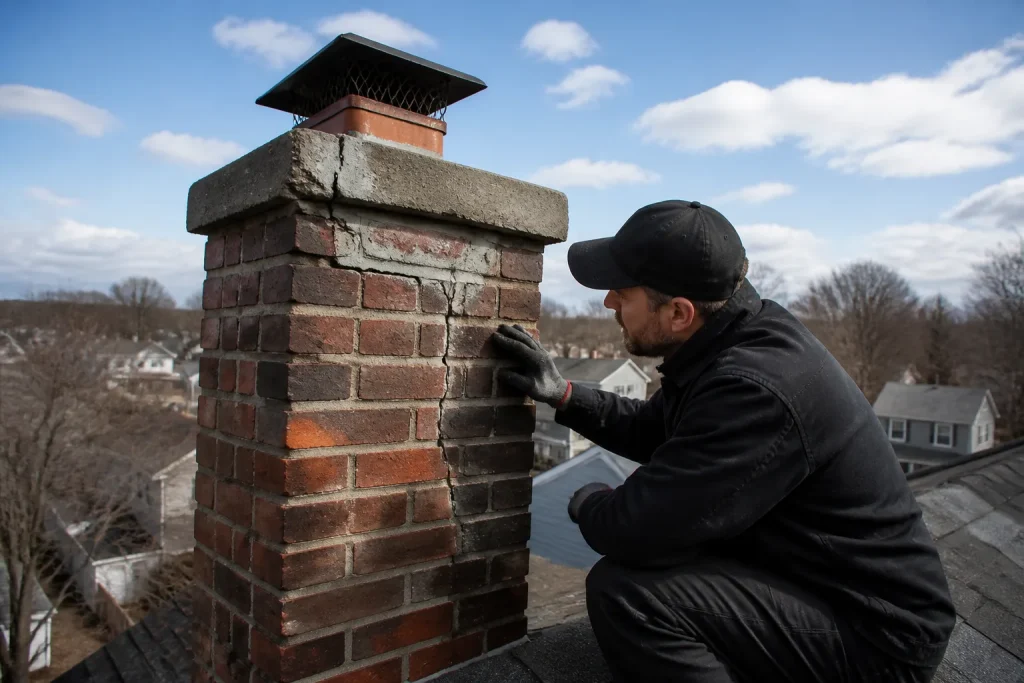
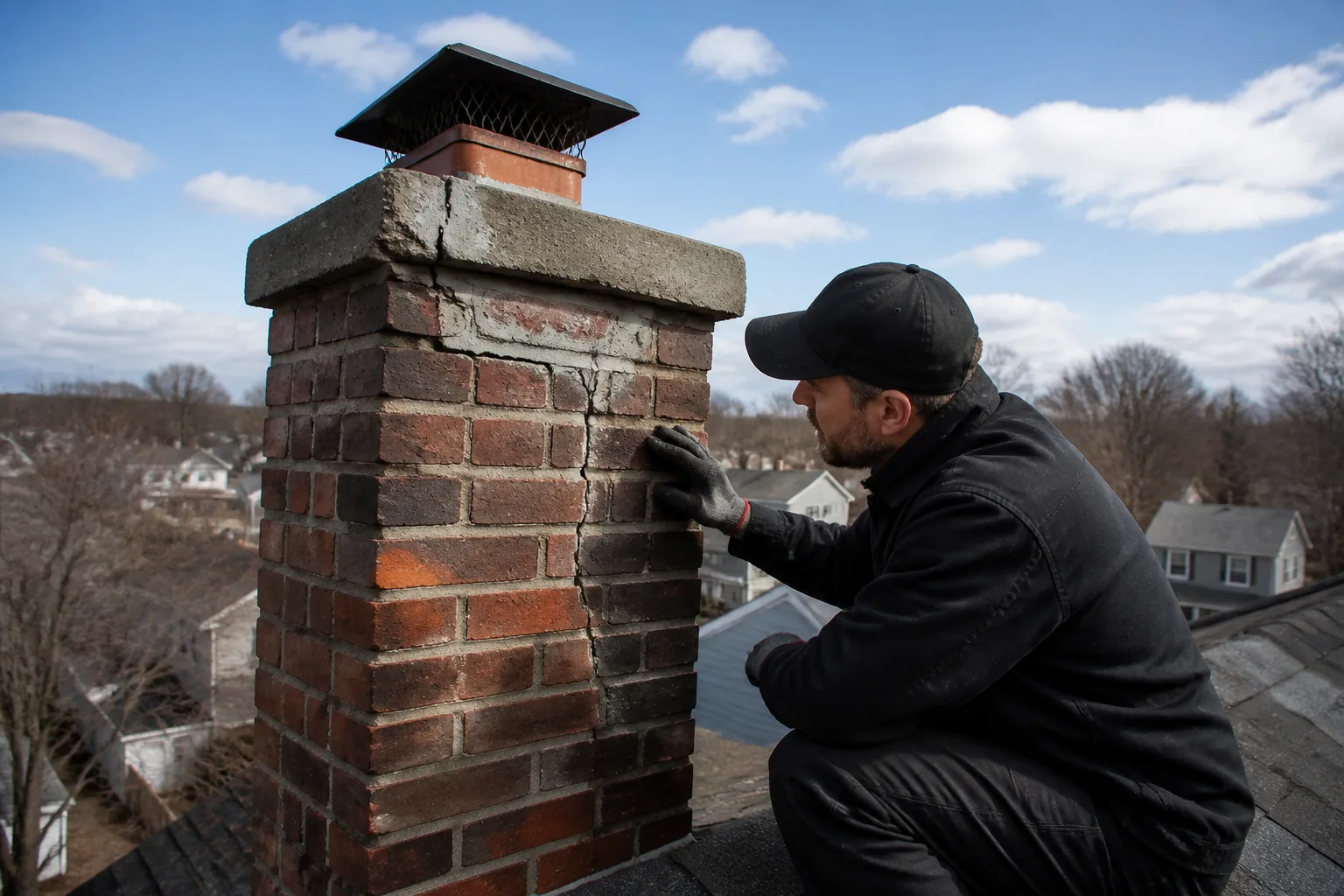
- Crown. Hairline cracks get sealed. A crown that’s separated from the flue, crumbling across its surface, or sloped the wrong way needs rebuilding so water runs off, not in.
- Cap. A missing or damaged cap lets water and animals in, so a proper cap and crown is usually the first thing that should be addressed. This is replace territory almost every time.
- Firebox. Cracked firebox brick gets repointed or rebuilt depending on depth; a firebox that’s been overfired and cracked through the structure is a rebuild, not a patch.
- Exterior masonry. Spalled brickwork and deteriorated mortar joints get repointed and repaired; a chimney that’s leaning, bulging, or losing whole courses is a structural call that can turn into a rebuild.
Notice the pattern. Where the failure is local and the cause is controllable, repair wins. Where the failure is structural or the cause keeps coming back, replacement is the cheaper long game, even if the invoice is bigger today.
Root-Cause Repair: Fix the Water Before the Interior
Most chimney damage in Corona starts with water. A chimney is a structure that sits up above the roofline and takes the weather head-on, and water finds every weakness: a cracked crown, a missing cap, flashing that’s pulled loose from the roof. Once water is inside, it does its real damage to the liner, the firebox, and the interior masonry, quietly, over years.
This is why we insist on fixing the source before the interior. Seal the crown, install or repair the cap with Gelco or Famco components, and repair the flashing so the chimney is actually shed of water. Then address the liner and firebox. Reverse that order and the new interior work gets soaked by the same leak that damaged the old one. It’s the chimney equivalent of fixing a roof leak before repainting the ceiling.
In our experience, the roofs and chimneys around Corona see enough seasonal rain and temperature swing that flashing and crown failures are common, and they’re also the cheapest things to catch early. If you’ve got a water stain on the ceiling near the chimney, that’s your cue to get eyes on the crown and flashing before anything else.
Age and Material: What Your Build Date Tells You
Corona has a lot of older housing stock, and the chimney’s age and construction tell you a lot about what’s likely to fail and how much life it has left. Older clay tile liners are common in houses built before the 1980s, and those tiles crack, spall, and separate with heat cycling. A cast-in-place liner has a different wear pattern, typically more uniform, but it can still crack and needs its own assessment. A retrofitted stainless liner, if it was properly sized and installed, tends to have the most predictable life left.
None of this is a verdict by itself. Age and material set the starting point; the inspection answers the real question. That’s why we specify the components we do, DuraFlex and Olympia Chimney for liner systems, HeatShield for restoration, Gelco and Famco for caps and flashing, and Copperfield where it fits the job. The right product depends on what the flue is actually doing, and the brands carry manufacturer specifications you can check, unlike anonymous hardware.
What a Real Inspection Report Should Contain
A report that supports a repair-or-replace decision is specific: it tells you the condition of each component, identifies the cause of each problem, and says plainly whether a repair will hold or whether the same cause will shorten its life. A vague report (“needs work,” “liner is questionable”) is a signal the assessment wasn’t deep enough to make the call. Ask for the specific findings, and ask what evidence supports them.
A professional Level 2 inspection, the kind you want before a purchase, a sale, or a first burn of the season, should give you enough to make an informed call without relying on the contractor’s word alone. If the inspection report tells you to replace but can’t tell you why the current one failed, keep asking questions.
When to call a pro
Any crack through a flue liner, any sign of water intrusion near the chimney, any masonry that’s leaning or losing material, and any smoke spill-back into the room are all calls for a trained professional. Liner work and masonry repair aren’t DIY territory, both for the structural consequences and for the safety of anyone up on the roof. We’re happy to give you a straight read on what’s actually needed.
Insurance and Resale: Why Documentation Matters
An undocumented chimney is a liability at resale. A buyer’s inspector flags it, a home-sale inspection recommends further evaluation, and now the seller is negotiating from a defensive position. A documented full liner replacement, with photos of the before-and-after flue and the specified materials, gives the buyer and their inspector a clear record. A stack of unrecorded patch repairs gives them nothing to verify.
Homeowner’s insurance is similar. Most policies cover sudden damage, like a lightning strike or a fallen limb, but not gradual deterioration, because that’s maintenance. If a repair or replacement is the result of ongoing water damage that was never addressed, the claim is likely to be denied, and the reason will trace back to the missing cap or cracked crown. That’s another argument for fixing water intrusion early, before it turns into a claim.
Related services in Corona
If you’re ready to move from diagnosis to action, we cover the full system in one relationship: a routine chimney sweep, cap and crown work with chimney cap & crown repair, and structural chimney repair. One contractor from crown to firebox means no coordinating two crews who each blame the other when something still leaks.
The Bottom Line
The repair-or-replace decision is a condition assessment, not a price comparison. Get the right diagnosis first, fix the water source, then choose between repair and replacement based on the failure mode and the component. Repair the right thing and a well-maintained system will outlast the cheap patch by a decade. The alternative is the most expensive lesson in chimney maintenance: doing it twice.
If you’re in Corona and need help deciding, Chimney Sweep Corona offers free estimates. Call (833) 968-1177. We’re a full-service chimney and fireplace specialist, sweeping through repair, and we specify the materials, HeatShield, DuraFlex, Olympia Chimney, Gelco, and Famco, that hold up to the local weather. We answer 24/7. Fast dispatch from 7am to 7pm, Sunday through Friday.
Frequently Asked Questions
Start with what’s failed, not how old the chimney is. A localized problem like a worn cap or a cracked crown is a repair. A liner that’s collapsed, a chimney that’s leaning, or damage that keeps returning after repair points to replacement. In Corona, an inspection that documents each component and the cause behind each problem is the place to start.
Only if the liner is sound. A crown patch over a failing flue liner is the classic expensive mistake: it looks fine from the street while the liner keeps deteriorating. Fix the crown and cap to stop the water, and assess the liner on its own condition, not on whether it can be seen from the ground.
The price depends on which component failed and what caused it, so there’s no single number. A cap replacement, a crown rebuild, a liner restoration, and a full liner replacement are different scopes with different costs. Call (833) 968-1177 for an exact quote. Estimates are free, and the written estimate sets the final price.
Yes, when it’s documented. A recorded replacement with photos of the flue before and after, plus the specific materials installed, gives a buyer’s inspector something to verify. Unrecorded patch repairs don’t. If you’re selling, an inspection report in hand puts you on firmer footing during negotiation.
Written by the team at Chimney Sweep Corona.
Need Chimney Cleaning Help?
Call Chimney Sweep Corona - the local pro we connect you with is licensed and insured, with free written estimates in Corona.
(833) 968-1177